

Glass thickness is one of the most important details in any glass project, but it is also one of the easiest to overlook.
Most people start by thinking about style. They picture a frameless shower, a clear glass railing, a bright storefront, a custom mirror wall, or a sleek office divider. That makes sense. Glass is visual. It changes how a space feels.
But behind that clean finished look, thickness does a lot of quiet work.
It affects strength. It affects movement. It affects how safe the glass feels under daily use. It can influence sound control, insulation, hardware choices, edge finishing, long-term durability, and even whether the final installation looks refined or underbuilt.
So, how thick should glass be?
The honest answer is: it depends on where the glass is going, how large the panel is, whether it is supported by a frame, what type of glass is being used, and what safety requirements apply. A cabinet insert does not need the same approach as a balcony guard. A small mirror is different from a full-height glass office wall. A decorative panel is not the same as a high-traffic commercial storefront glass system.
This glass thickness guide breaks down the practical rules homeowners, contractors, designers, and business owners should understand before starting a project.
Why Glass Thickness Matters More Than Most People Think

Glass thickness is not just about making glass “stronger.” It is about matching the glass to the job.
When glass is too thin for the application, it may flex, rattle, crack more easily, feel unstable, or fail to meet safety expectations. When it is too thick, it may become unnecessarily heavy, more expensive, harder to install, and incompatible with certain hinges, channels, clamps, or frames.
The goal is balance.
Good glass selection considers:
- Panel size
- Glass type
- Support method
- Location
- Wind or impact exposure
- Privacy needs
- Thermal performance
- Sound control
- Building code requirements
- Daily wear and tear
That is why a professional glass contractor does not choose glass thickness by guesswork. The right specification comes from the full project conditions.
For example, a small framed cabinet door may only need relatively thin glass because the frame supports the panel. A frameless shower door needs thicker glass because the glass itself is a structural part of the enclosure. A railing panel may require laminated or tempered safety glass at a much heavier thickness because it acts as a protective barrier.
Same material. Very different expectations.
Common Glass Thickness Ranges by Project Type
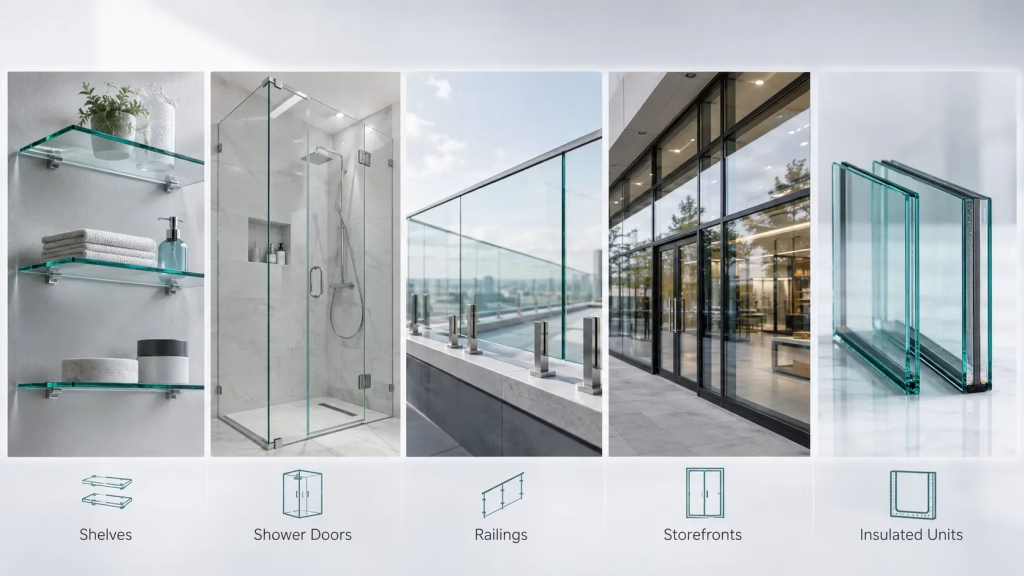
The table below gives a helpful starting point. It is not a substitute for a site-specific recommendation, but it shows how glass thickness changes depending on the project.
| Project Type | Common Thickness Range | Why It Matters |
|---|---|---|
| Cabinet glass | 3 mm to 6 mm | Lightweight panels supported by cabinet frames |
| Custom mirrors | 4 mm to 6 mm | Clear reflection, manageable weight, clean wall mounting |
| Interior glass shelves | 6 mm to 12 mm+ | Depends on span, load, and support points |
| Framed shower glass | 6 mm to 8 mm | Frame adds support, so glass can often be lighter |
| Frameless shower glass | 10 mm to 12 mm | Thicker glass improves stability and premium feel |
| Office partitions | 10 mm to 12 mm+ | Improves rigidity, acoustics, and durability |
| Storefront glass | Varies widely | Depends on safety, size, framing, insulation, and exposure |
| Glass railings | Often 12 mm+ or laminated assemblies | Must perform as a safety barrier |
| Insulated glass units | System-based | Includes multiple panes, spacer, air or gas cavity, and coatings |
Notice that there is no single “best” glass thickness. There is only the best thickness for a specific use.
1. Start With the Application, Not the Appearance
The first rule of glass thickness is simple: decide what the glass must do before deciding how it should look.
Is it decorative? Is it load-bearing? Is it part of a door? Will people lean on it? Will it be exposed to weather? Is it near stairs, a balcony, or a public entrance? Will children, customers, employees, or equipment be nearby?
A decorative mirror wall has different demands than a glass guard. A glass tabletop has different demands than a commercial entry door. A glass cabinet panel is not expected to resist the same daily impact as a retail door.
This is where many project mistakes begin. People see a beautiful image online and assume the same glass thickness will work in their space. But the image rarely tells you the panel size, the glass type, the hardware, the anchoring method, or the code requirements.
Before choosing a thickness, define the job clearly:
- What is the glass supporting?
- What is supporting the glass?
- How large is the panel?
- How often will it be touched, opened, leaned on, or cleaned?
- What happens if it breaks?
Those answers matter more than appearance alone.
2. Understand the Difference Between Thickness and Glass Type
Glass thickness and glass type work together, but they are not the same thing.
Thicker glass is not automatically the safest choice if the wrong glass type is used. In many safety-sensitive areas, the glass may need to be tempered, laminated, or both.
Tempered glass is heat-treated to become stronger than regular annealed glass. When it breaks, it is designed to crumble into smaller pieces rather than sharp shards. Laminated glass includes an interlayer that helps hold broken glass together after impact. That can be helpful for security, overhead glazing, railings, storefronts, sound control, and other applications where containment matters.
Zenith Glass has a helpful companion article on tempered vs. laminated glass if you want a deeper comparison before choosing a product.
So, is thicker tempered glass better than thinner laminated glass?
Not always. It depends on the risk. Tempered glass may be ideal for a shower door. Laminated glass may be preferred where the panel should remain in place after breakage. In some cases, a laminated tempered assembly may be specified for added performance.
The right glass thickness cannot be separated from the right glass makeup.
3. Glass Thickness for Shower Doors and Bathroom Glass
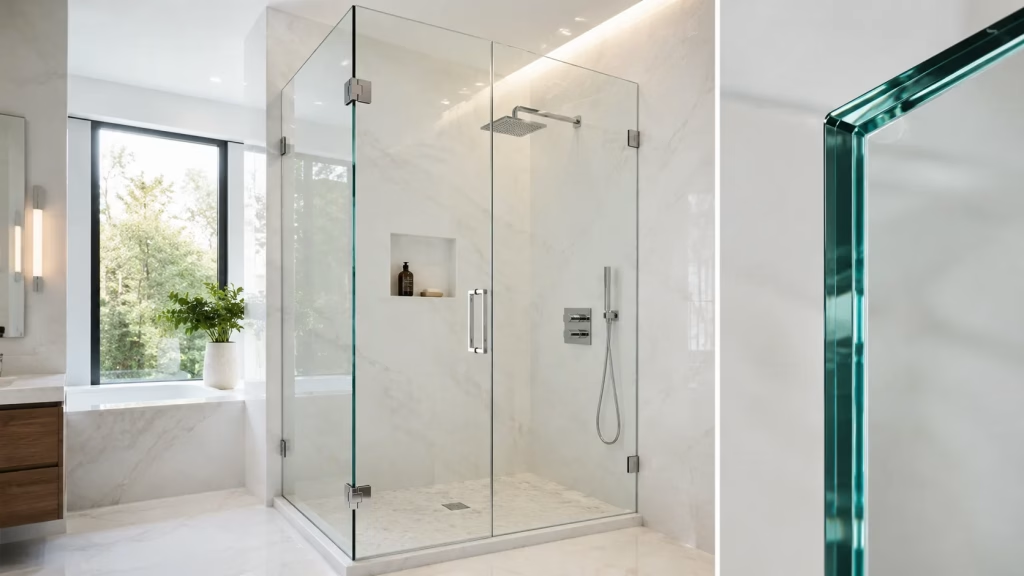
Bathroom glass is one of the most common places where thickness questions come up.
For framed shower doors, the surrounding frame provides support. Because of that, the glass can often be thinner while still performing well. For frameless showers, the glass carries more of the structure on its own. That is why frameless shower enclosures usually use thicker panels.
Many frameless shower projects use 10 mm or 12 mm tempered glass because it feels stable, hangs well on proper hardware, and gives the enclosure a premium appearance. Thinner glass may be suitable for certain semi-frameless or framed designs, but it may not deliver the same solid feel in a frameless system.
If you are planning a bathroom upgrade, the style of enclosure matters:
- Sliding shower doors need glass that works with the track system.
- Pivot doors need glass compatible with hinges and handle placement.
- Fixed panels need proper channels, clips, or brackets.
- Large panels need careful measurement and support planning.
What glass thickness is best for a frameless shower?
For many custom frameless shower projects, 10 mm is a common practical choice, while 12 mm can create a heavier, more luxurious feel. The final decision depends on the layout, door size, hardware, wall condition, and budget.
Zenith’s frameless shower doors and glass showers pages are useful starting points if your project is bathroom-focused.
4. Glass Thickness for Railings, Guards, and Safety Barriers
Glass railings are beautiful because they keep views open. But they are also safety systems, not just design features.
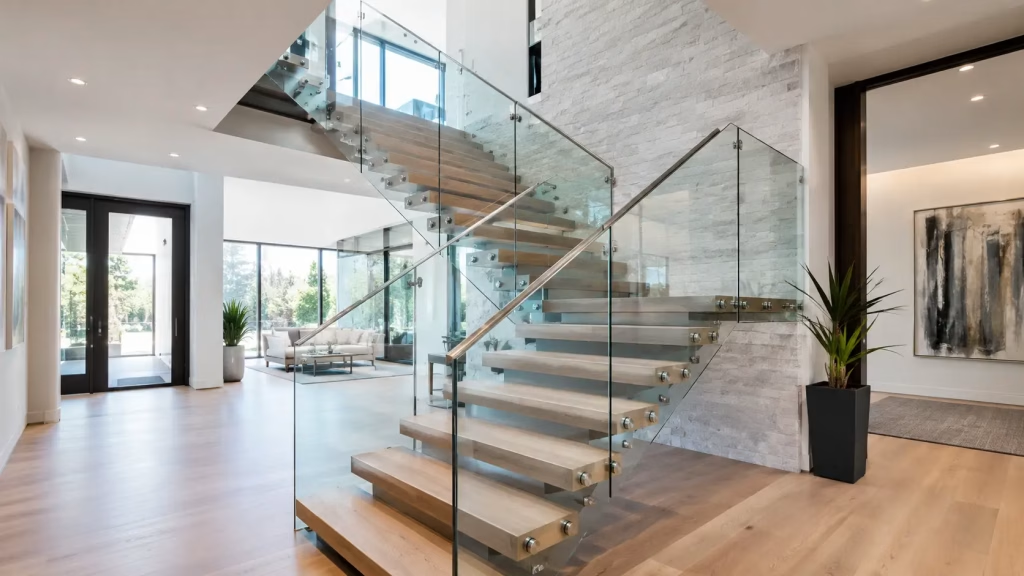
That means glass thickness must be considered alongside glass type, panel size, hardware, post spacing, mounting method, height, and local requirements. A railing panel may need to resist impact, pressure, and daily use while staying securely supported.
This is not an area for guesswork.
In many railing and guard applications, laminated safety glass is used because it can help keep the panel together if breakage occurs. Depending on the design, tempered laminated glass may be required or recommended. The exact specification depends on the project and applicable codes, including guidance from resources such as the National Building Code of Canada and local building authorities.
For homeowners, the key question is not simply, “How thick is the glass?”
The better question is, “Is the whole railing system designed correctly?”
That includes:
- Glass thickness
- Glass type
- Mounting hardware
- Anchoring surface
- Panel spacing
- Edge finishing
- Load requirements
- Indoor or outdoor exposure
If you are exploring stair, balcony, deck, or interior railing upgrades, review Zenith’s glass railings service page before finalizing the design.
5. Glass Thickness for Storefronts and Commercial Doors
Commercial glass has to do more than look clean. It must support visibility, access, safety, energy performance, and security.
A storefront system might include tempered glass, laminated glass, insulated glass, aluminum framing, door hardware, panic hardware, seals, and custom dimensions. The best glass thickness depends on the size of the opening, the door system, the surrounding frame, exposure to impact, and whether the property needs better thermal or acoustic performance.
For retail spaces, restaurants, offices, clinics, showrooms, and commercial units, thickness also affects customer confidence. Glass that feels too light or flexible can make an entrance feel less secure. Glass that is properly specified feels solid and professional.
Do all storefronts need the thickest possible glass?
No. Overspecifying glass can create unnecessary weight and cost. The smarter approach is to match the glass to the storefront system and risk level. A small interior office door does not need the same solution as a street-facing storefront near heavy pedestrian traffic.
For commercial projects, it is also worth reviewing commercial glass doors and windows, commercial doors, glass repair, and replacement, and commercial storefront glass options together rather than treating the glass panel as a separate item.
6. Glass Thickness for Windows and Insulated Glass Units
Window glass is different because performance often comes from the full insulated glass unit, not just a single pane.
An insulated glass unit usually includes two or more panes separated by a spacer and sealed around the edge. The space between panes may contain air or gas, and the glass may include coatings that improve thermal performance. In this case, glass thickness is only one part of the system.
For Canadian homes and businesses, energy performance matters because windows, doors, and skylights can influence heating and cooling demand. Natural Resources Canada offers helpful guidance on energy-efficient windows, doors, and skylights for anyone comparing replacement options.
When choosing insulated glass, consider:
- Pane thickness
- Spacer type
- Overall unit thickness
- Low-E coating options
- Argon or gas fill options
- Frame compatibility
- Condensation resistance
- Sound reduction needs
If your current windows are foggy, drafty, cracked, or uncomfortable near the glass, thickness alone may not solve the problem. The sealed unit, frame, and installation quality all matter.
Zenith’s insulated glass page is the most relevant place to connect glass thickness with energy comfort, while the article on fogged double pane glass windows can help if moisture is already visible between panes.
7. Glass Thickness for Office Partitions and Interior Dividers
Office glass needs to balance openness with privacy, sound control, and daily durability.
Thin glass may work for small decorative inserts, but full-height office partitions usually need a more substantial specification. Larger panels can flex if they are too thin. They may also transmit more sound, feel less stable, and look less refined in a modern workplace.
For many office divider systems, 10 mm to 12 mm glass is common, but the right answer depends on the height, width, framing, door integration, acoustic needs, and whether the glass is clear, frosted, laminated, or part of a specialty system.
If privacy is important, glass thickness can be paired with other choices:
- Frosted glass
- Etched patterns
- Privacy film
- Laminated acoustic glass
- Sliding glass systems
- Framed or frameless partitions
A meeting room may need better acoustic control than a visual divider between work zones. A reception area may prioritize clean branding. A private office may need a mix of transparency and discretion.
Zenith’s glass offices, office glass dividers, and frosted glass pages can help connect the right glass thickness with privacy and workplace design goals.
8. Do Not Ignore Panel Size and Support
Panel size can change everything.
A small piece of 6 mm glass may feel sturdy in a cabinet door. That same thickness across a much larger unsupported panel may flex too much. The larger the glass, the more important thickness, glass type, and support become.
Support also changes the calculation.
Glass held on all four sides by a frame behaves differently from glass held only along one edge. A shelf supported on both ends behaves differently from a shelf supported with minimal brackets. A frameless door behaves differently from a fixed panel in a channel.
That is why custom glass should be measured and specified as a complete system. The glass, hardware, opening, and use case all work together.
Before approving a design, ask:
- Is the panel framed, semi-framed, or frameless?
- How many edges are supported?
- How wide and tall is the panel?
- Will the glass move, swing, slide, or stay fixed?
- Will people lean on it?
- Will it hold weight?
- Is it exposed to heat, cold, vibration, or impact?
These questions prevent underbuilt installations and unnecessary overspending.
9. When to Ask a Glass Professional Before Choosing Thickness
Some projects are simple. Others should always involve professional review.
You should speak with a glass professional before choosing glass thickness if the project includes:
- Large panels
- Frameless doors
- Shower enclosures
- Glass railings or guards
- Commercial entrances
- Storefront systems
- Insulated glass replacement
- Glass near stairs or balconies
- High-traffic public areas
- Panels exposed to wind or weather
- Custom holes, notches, cutouts, or polished edges
You should also get professional advice if the glass has already cracked, shifted, loosened, fogged, or started making noise in its frame.
Can you replace glass with a thicker panel than before?
Sometimes, but not always. The frame or hardware may not accept thicker glass. A heavier panel may require different hinges, channels, rollers, anchors, or supports. In window systems, the insulated glass unit must fit the sash or frame correctly. In doors, the added weight can affect operation.
Upgrading glass thickness is possible in many projects, but it should be planned properly.
Common Mistakes to Avoid When Choosing Glass Thickness
Even a beautiful glass project can disappoint if the technical details are rushed. Here are the mistakes to avoid.
Choosing based only on price
Cheaper glass may look fine at first, but if it is too thin or not suited to the application, it can cost more later through repairs, replacement, safety concerns, or poor performance.
Assuming thicker is always better
Thicker glass can be stronger and more stable, but it also adds weight. That extra weight must be supported by the right hardware and structure.
Ignoring safety glass requirements
Some locations require safety glass. Depending on the application, tempered, laminated, or other approved glazing may be needed. Resources such as the Ontario Building Code can help property owners understand why professional compliance matters.
Forgetting about edges and cutouts
Glass edges are important. Holes, notches, hinge cutouts, and exposed polished edges must be planned carefully. These details can affect the final glass thickness and fabrication method.
Using the same thickness everywhere
A home or business may need several types of glass in one project. The shower, railing, mirror, office panel, and window unit may all need different specifications.
How Glass Thickness Affects the Finished Look
Glass thickness also changes the way a project feels visually.
Thicker glass often looks more substantial and architectural. It can create a premium edge detail, especially in frameless showers, glass railings, tabletops, and office partitions. Thin glass can look clean and lightweight when used correctly, especially in framed cabinet doors, smaller mirrors, and decorative panels.
The edge finish matters too.
Polished edges make exposed glass look refined. Bevelled edges can add a decorative effect. Seamed edges may be suitable when the edge is hidden in a frame. For custom work, the edge finish should be selected at the same time as the glass thickness because both influence the final appearance.
This is especially important for custom mirrors, shelves, tabletops, and visible glass panels where the edge becomes part of the design.
Choosing the Right Glass Thickness for Your Project

The best glass thickness is the one that fits the design, safety requirements, hardware, location, and daily use of the space.
For a simple decorative insert, that may mean a lighter panel. For a frameless shower, it may mean thicker tempered glass. For a railing, it may mean a laminated safety assembly. For a storefront, it may mean a complete commercial glazing system. For a window, it may mean an insulated unit designed for comfort and energy performance rather than just a thicker pane.
A good glass thickness guide can point you in the right direction, but final selection should always be based on the actual project.
If you are comparing options, start with three questions:
- What does the glass need to do?
- How will it be supported?
- What safety or performance requirements apply?
Those questions make it much easier to choose glass that looks good and performs properly.
Plan Your Glass Project With Zenith Glass
Glass thickness is one detail that affects the entire result. When it is chosen well, the finished installation feels stable, safe, clean, and built for the space. When it is chosen poorly, even a beautiful design can become frustrating.
Zenith Glass works with residential, commercial, and industrial glass needs across the GTA, including residential glass repair and replacement, commercial glass doors and windows, industrial glass, glass showers, glass railings, insulated glass, custom mirrors, and office glass dividers.
If you are unsure which glass thickness your project needs, the safest next step is to review the design with an experienced team before fabrication begins. Visit the Zenith Glass projects page for inspiration, explore the service areas page to find local coverage, or contact Zenith Glass to discuss the right glass thickness, glass type, and installation approach for your space.