

Solar Heat Gain Coefficient is one of the most useful numbers to understand when choosing glass for a home, storefront, office, or commercial building.
It sounds technical at first, but the idea is simple.
Solar Heat Gain Coefficient tells you how much of the sun’s heat passes through glass and enters the space. That matters because windows do more than provide a view. They affect comfort, glare, cooling costs, heating balance, tenant satisfaction, and how usable a room feels at different times of day.
If a living room overheats in the afternoon, a storefront feels too warm near the front window, or an office meeting room becomes uncomfortable when the sun hits the glass, Solar Heat Gain Coefficient may be part of the reason.
Understanding it helps you choose glass more confidently instead of relying only on appearance, price, or pane count.
What Solar Heat Gain Coefficient Actually Means
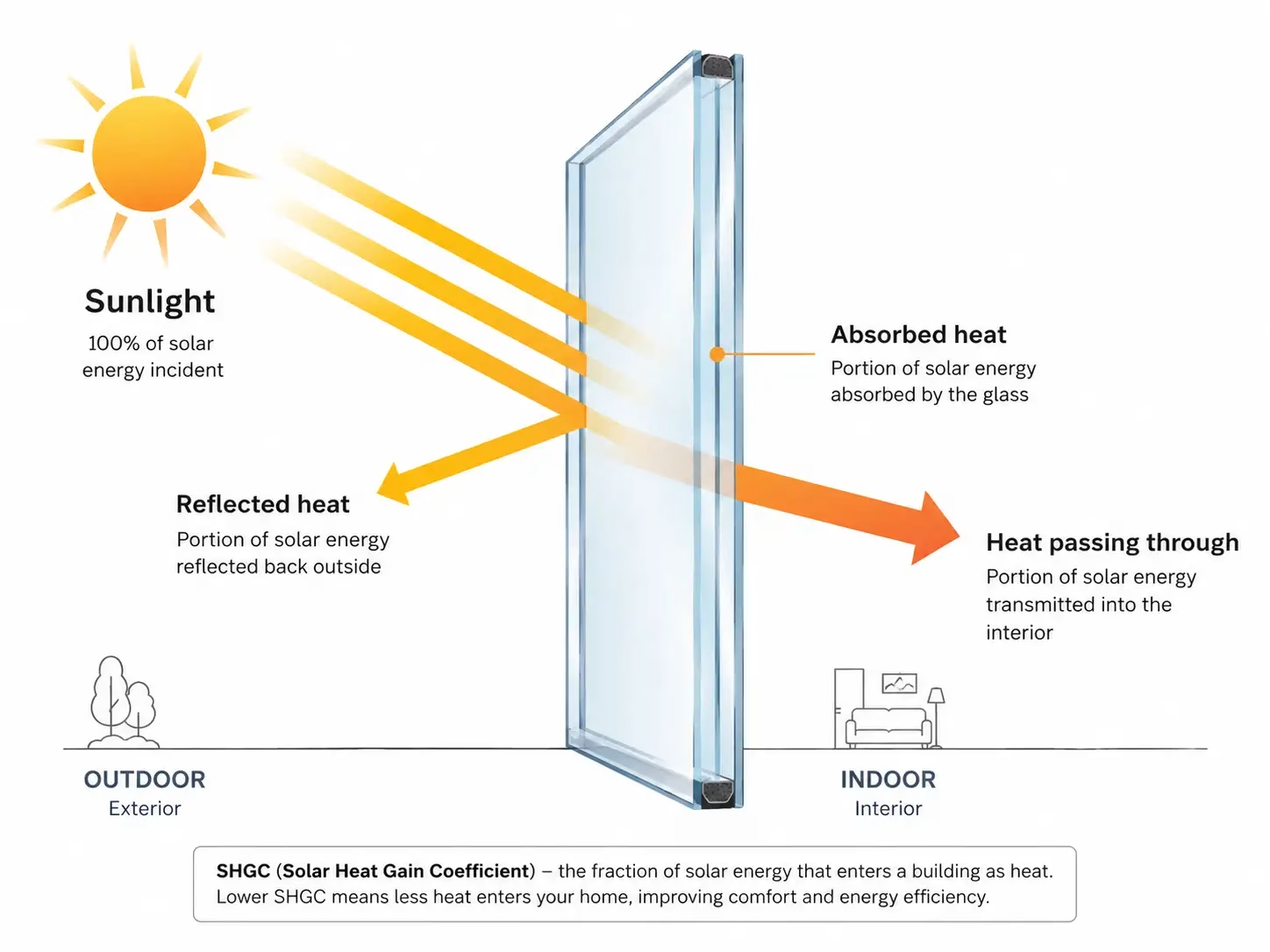
Solar Heat Gain Coefficient, often shortened to SHGC, measures how much solar heat passes through a window or glass system.
The rating is usually shown as a number between 0 and 1.
A lower number means less solar heat passes through. A higher number means more solar heat enters the space.
For example, glass with a lower Solar Heat Gain Coefficient may help reduce overheating in a room with strong afternoon sun. Glass with a higher rating may allow more passive heat from the sun, which can sometimes be useful in colder months or shaded areas.
The key is that there is no single “best” SHGC for every building.
A comfortable glass choice depends on the direction the windows face, the size of the glass, the season, the building use, the amount of shade, the HVAC system, and the comfort problem you are trying to solve.
That is why Solar Heat Gain Coefficient should be reviewed alongside other performance factors, especially U-value, air leakage, visible light, glass type, frame condition, and installation quality.
For a deeper companion topic, Zenith Glass has a helpful guide on window U value for Canadian homes and buildings, which explains heat transfer from another important angle.
Why Solar Heat Gain Coefficient Matters in Canada
In Canada, glass needs to perform across very different conditions.
A window may face freezing temperatures in winter, strong sunlight in spring, humid heat in summer, and rapid temperature swings in fall. A glass choice that feels comfortable in one season may feel different in another.
This is where Solar Heat Gain Coefficient becomes especially useful.
In winter, some solar heat can feel welcome. Sunlight through a window can make a room feel warmer and brighter. In summer, that same solar gain may make the space too hot, increase cooling demand, or create uncomfortable glare.
This is common in rooms with large south- or west-facing windows.
It is also common in commercial buildings with large storefront glass, glass office walls, or wide exposed windows facing parking lots, roads, or open sky.
Natural Resources Canada explains that windows, doors, and skylights can be a significant source of energy loss in homes, and performance ratings help buyers compare products more carefully. You can review their overview of windows, doors, and skylights for broader context on energy-efficient choices.
For homeowners, SHGC can affect daily comfort.
For business owners, it can affect customers and staff.
For property managers and investors, it can affect tenant complaints, cooling loads, maintenance planning, and the perceived quality of the building.
Solar Heat Gain Coefficient vs U-Value
Solar Heat Gain Coefficient and U-value are related, but they are not the same thing.
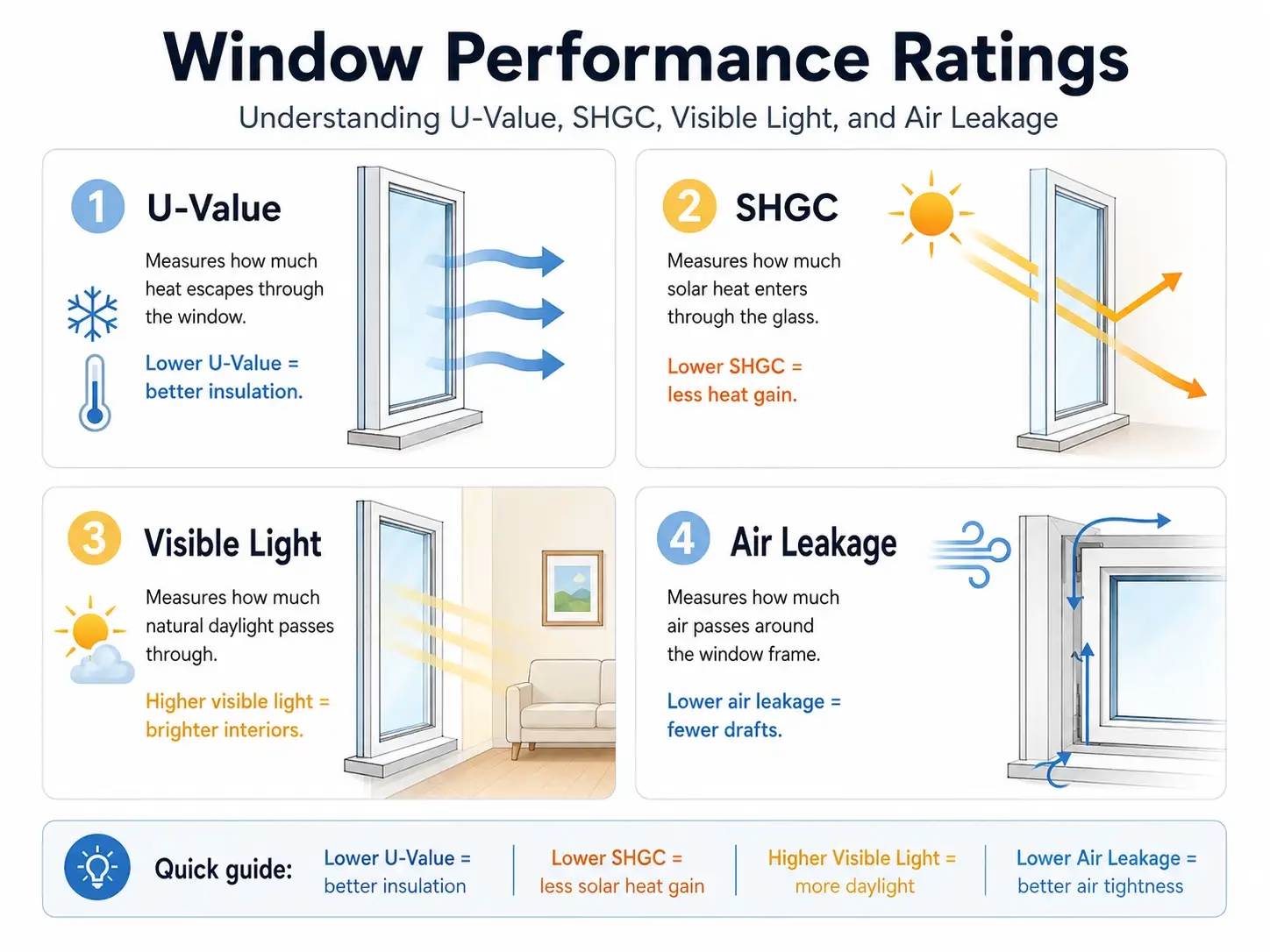
U-value measures how easily heat transfers through a window because of temperature difference. In simple terms, it helps explain heat loss in winter and heat movement through the window assembly.
Solar Heat Gain Coefficient measures heat from sunlight.
That difference matters.
A window can have a strong U-value but still allow too much solar heat into a west-facing office. Another window may reduce solar gain well but also reduce daylight more than expected. A balanced glass choice considers both ratings.
Here is a simple comparison:
| Rating | What It Measures | Why It Matters |
|---|---|---|
| Solar Heat Gain Coefficient | How much solar heat passes through glass | Helps manage overheating, cooling load, and sun comfort |
| U-value | How quickly heat transfers through the window | Helps compare insulation and heat loss |
| Visible transmittance | How much visible light passes through | Affects brightness, daylight, and views |
| Air leakage | How much air passes around the window system | Affects drafts, comfort, and performance |
| Energy Rating | A combined performance value used in some window comparisons | Helps compare overall efficiency |
If you are comparing energy performance labels, Natural Resources Canada’s page on ratings and certification is useful because it explains several window performance terms in one place.
The important takeaway is simple: Solar Heat Gain Coefficient tells you about sun heat, while U-value tells you about heat transfer through the window system.
You need both numbers to make a smart decision.
Is a Lower Solar Heat Gain Coefficient Always Better?
Not always.
A lower Solar Heat Gain Coefficient can be helpful when a space overheats, gets harsh afternoon sun, or requires stronger cooling control. It may be useful for west-facing storefronts, large office windows, sun-exposed boardrooms, restaurants with front-facing glass, or living rooms that become too warm in summer.
But lower is not automatically better for every situation.
If a room is shaded most of the day, a very low SHGC may reduce useful winter warmth without solving a real overheating problem. If a property owner wants more passive solar warmth during colder months, a moderate or higher SHGC may make sense in some areas.
The better question is not, “What is the lowest Solar Heat Gain Coefficient?”
The better question is, “What SHGC fits this room, this exposure, and this building goal?”
That is why glass selection should be based on the full context.
A north-facing window does not behave like a west-facing window. A residential bedroom does not behave like a retail storefront. A warehouse window does not have the same priorities as an office meeting room.
How SHGC Affects Everyday Comfort
Most people do not think about Solar Heat Gain Coefficient when they first notice a comfort problem.
They simply notice that a room feels too hot.
Or they notice that staff avoid sitting near the glass.
Or they notice that customers move away from a sunny area in a store.
Or they notice that blinds are always closed, even though the building was designed to feel bright and open.
These are practical clues that solar gain may need attention.
Glass with the right SHGC can help reduce harsh heat while still allowing useful daylight. This can make a room feel more usable across the day.
In homes, that may mean a more comfortable living room, kitchen, bedroom, or home office.
In businesses, it may mean a better customer experience near the front window.
In offices, it may mean fewer hot spots, better meeting room comfort, and a cleaner look because blinds do not need to be closed all day.
For modern workplaces, glass is often used to support openness and daylight. If you are planning an office layout, Zenith’s office glass dividers page is a useful internal resource because it shows how glass can support modern workspace design while still considering privacy, acoustic needs, and layout.
Solar Heat Gain Coefficient and Glare Are Not the Same Thing
Solar Heat Gain Coefficient is about heat from sunlight.
Glare is about visual brightness and discomfort.
They often appear together, but they are not identical.
A room can be too bright without being extremely hot. Another room can feel hot even if glare is partly controlled by blinds or tinting. This is why glass choices should consider visible light as well as SHGC.
Visible transmittance explains how much visible light passes through the glass. SHGC explains how much solar heat passes through.
For example, a glass product may reduce solar heat while still allowing a good amount of daylight. Another option may reduce both heat and brightness more heavily. The right choice depends on the space.
A retail store may want clear visibility and daylight, but not uncomfortable heat near the entrance.
An office may want daylight without screen glare.
A home may want bright views without afternoon overheating.
This balance is one reason professional guidance matters. Glass is not just a material. It is part of how the space feels.
7 Smart Ways to Use Solar Heat Gain Coefficient Before Choosing Glass

1. Start with the direction the glass faces
Window direction is one of the biggest clues.
South-facing glass may receive strong sun for long periods. West-facing glass can be especially challenging because afternoon sun often arrives when outdoor temperatures are already high. East-facing glass may create morning brightness and heat. North-facing glass usually receives less direct sun.
Before choosing glass, map the problem.
Which side of the building overheats? What time of day does it happen? Is it seasonal? Does it affect one room or the whole property?
Solar Heat Gain Coefficient becomes more useful when it is connected to real exposure.
2. Compare SHGC with U-value
A good window decision should not focus on one rating only.
If winter heat loss is the main issue, U-value matters. If summer overheating is the main issue, SHGC becomes more important. If both problems exist, the glass package needs to balance both.
For Canadian homes and buildings, this is common.
A property owner may want better insulation in winter but also less overheating in summer. That is where insulated glass, Low-E coatings, proper sizing, and professional selection can make a meaningful difference.
Zenith’s insulated glass service page is relevant when the goal is better comfort, energy performance, and sealed-unit performance.
3. Think about the size of the glass
A small window with a certain SHGC may not create a major comfort problem.
A large wall of glass with the same SHGC may feel completely different.
The bigger the glass area, the more important solar heat gain can become. This is especially true for storefronts, showrooms, offices, restaurants, clinics, and homes with large picture windows.
Large glass looks beautiful, but it needs the right performance strategy.
That includes the glass type, thickness, coatings, seals, frame, and installation method. Zenith’s glass thickness guide is a helpful related read because strength, size, and performance all need to work together.
4. Review how the space is used
The best Solar Heat Gain Coefficient depends partly on what people do inside the space.
A bright sunroom may welcome more solar warmth in winter. A home office with screens may need more glare and heat control. A restaurant may need comfortable seating near the window. A storefront may need clear product visibility without creating an overheated entry area.
For businesses, glass performance affects more than energy use. It affects how people experience the space.
If customers enter a store and immediately feel heat through the glass, that impression matters. If employees avoid certain desks because of sun exposure, that matters too.
For retail, restaurant, clinic, showroom, and office spaces, Zenith’s commercial glass doors and windows page is a practical starting point for understanding commercial glass applications.
5. Do not rely only on blinds or film
Blinds, shades, and films can help manage sunlight, but they should not always be the only solution.
If a space needs blinds closed all day, the glass may not be performing the way the building needs it to perform. Closed blinds reduce daylight, hide views, and can make a bright space feel boxed in.
Some window films may also affect heat absorption, stress, warranty considerations, or glass performance depending on the existing unit. Before applying aftermarket solutions, it is smart to understand the glass itself.
If glass is already showing cracks, stress marks, fogging, or seal failure, review Zenith’s guide to window stress cracks before adding anything that could change how heat behaves on the pane.
6. Consider Low-E glass and insulated glass units
Low-E glass can help control certain types of heat transfer while still allowing light through. In many modern glass systems, Low-E coatings are used with insulated glass units to improve comfort and energy performance.
Different Low-E options can behave differently, so the details matter.
Some are designed to allow more solar gain. Others are designed to reduce it. This is why Solar Heat Gain Coefficient should be discussed before choosing the glass package.
For properties dealing with fogging, failed seals, outdated double-pane units, or comfort complaints, Zenith’s guide on how to repair fogged double-pane glass windows may also help clarify whether the issue is surface moisture, trapped moisture, or a failed insulated unit.
7. Plan for long-term comfort, not just today’s problem
Glass upgrades should solve the immediate issue, but they should also support the property over time.
A window that reduces overheating today should still provide good daylight, durability, safety, and visual appeal tomorrow. A storefront that looks modern should also support comfort and reliable operation. An office glass upgrade should work with the layout, privacy needs, and daily use of the space.
This is where a planned glass strategy is better than a rushed decision.
Instead of reacting only when glass cracks, fogs, or becomes uncomfortable, property owners can evaluate performance early and choose a better long-term solution.
Zenith’s glass maintenance checklist is a helpful resource for spotting early issues before they become urgent.
How SHGC Matters for Storefronts, Offices, and Commercial Buildings

Commercial glass has a different job than residential glass.
It needs to look clean and professional. It needs to support safety and security. It often needs to handle more traffic, larger openings, more frequent cleaning, and stronger public visibility.
Solar Heat Gain Coefficient adds another layer to that decision.
For storefronts, a poor SHGC match can make the front of the business too hot, especially during afternoon sun. This can affect customers, staff, displays, and cooling demand.
For offices, the wrong glass can create hot meeting rooms, uncomfortable desks, or screen glare. In open workspaces, even one overheated zone can affect how people use the floor plan.
For industrial buildings, solar heat gain can matter around large windows, overhead glazing, employee areas, loading zones, or older glass that no longer performs well.
Zenith supports different types of properties through dedicated pages for commercial storefront glass, office glass solutions, and industrial glass.
If your building is in the GTA or surrounding areas, Zenith’s service areas page can also help you find local coverage, including pages for communities such as Scarborough, Mississauga, North York, and Vaughan.
What Is a Good Solar Heat Gain Coefficient?
A good Solar Heat Gain Coefficient depends on the building.
For spaces that overheat from direct sun, a lower SHGC may be useful. For spaces that benefit from winter sun, a moderate or higher SHGC may be reasonable. For mixed-use buildings, different elevations may need different glass strategies.
This is why choosing one number for the entire property is not always ideal.
A south-facing storefront, a shaded north wall, a west-facing boardroom, and an interior glass divider do not have the same performance needs.
A better approach is to ask:
What direction does the glass face?
What season creates the biggest comfort issue?
Is the goal to reduce heat, improve insulation, preserve daylight, control glare, reduce noise, improve safety, or upgrade appearance?
Is the existing glass fogged, cracked, outdated, or performing poorly?
Are there tenant, customer, staff, or family comfort complaints?
These questions make Solar Heat Gain Coefficient easier to apply in real life.
Common Mistakes When Comparing SHGC
One common mistake is assuming that lower is always better.
It is not. Lower SHGC can reduce solar heat, but it may not be ideal for every window or every season.
Another mistake is choosing glass based only on looks.
Clear glass may look similar from a distance, but two glass units can perform very differently. Coatings, gas fills, spacers, pane count, thickness, lamination, and installation quality all affect real-world performance.
A third mistake is ignoring the frame and installation.
Even excellent glass can underperform if the surrounding system leaks air, traps moisture, puts pressure on the pane, or allows drafts around the opening.
A fourth mistake is waiting until the glass fails.
If a window is already fogging, leaking, cracking, or causing comfort complaints, the building has likely been giving warning signs for a while. Planned replacement gives you more time to compare options and avoid repeating the same performance problem.
How Solar Heat Gain Coefficient Connects to Energy-Efficient Glass
Energy-efficient glass is not just about keeping heat inside during winter.
It is also about controlling unwanted heat, improving comfort, reducing drafts, managing condensation risk, supporting daylight, and helping the building perform more consistently.
Solar Heat Gain Coefficient is one part of that bigger picture.
For example, insulated glass can help reduce heat transfer. Low-E coatings can help manage radiant heat. The right SHGC can help control solar heat. Laminated glass can support safety, security, and sound reduction. Tempered glass can support strength and safety in high-contact areas.
Each option solves a different problem.
That is why glass should be selected based on the application. A shower enclosure, glass railing, office divider, storefront, industrial window, and residential insulated unit all have different demands.
If you are comparing safety glass as part of a larger project, Zenith’s guide on tempered vs. laminated glass can help you understand how different glass types behave.
When Should You Ask a Glass Professional About SHGC?
You should ask about Solar Heat Gain Coefficient whenever sunlight is affecting comfort, cooling, glare, or usability.
This is especially important when:
A room overheats in summer.
A storefront feels too warm near the glass.
Staff avoid sunny desks or meeting rooms.
Blinds stay closed most of the day.
A property has large south- or west-facing windows.
You are upgrading insulated glass units.
You are comparing Low-E glass options.
You are planning a commercial renovation.
You are improving a rental, office, retail, or mixed-use property.
You want better energy performance without losing a clean glass look.
A glass professional can help connect the rating to the actual building. That includes reviewing the opening, exposure, frame condition, glass size, safety requirements, and whether the current issue is caused by solar gain, insulation, seal failure, air leakage, or another problem.
Choose Smarter Glass With Zenith Glass

Solar Heat Gain Coefficient gives homeowners, business owners, contractors, property managers, and investors a better way to understand how glass performs in real life.
It explains why some rooms overheat, why some storefronts feel uncomfortable, why office glass needs more than a clean look, and why energy-efficient glass should be selected with both comfort and performance in mind.
But SHGC is only one part of the decision.
The best glass choice also considers U-value, visible light, safety, noise, thickness, frame condition, installation quality, maintenance history, building use, and long-term goals.
Zenith Glass helps residential, commercial, and industrial clients choose glass solutions that fit the space instead of forcing a one-size-fits-all answer. You can explore insulated glass services, review completed work on the projects page, browse local service areas, or visit the contact page to discuss a glass repair, replacement, or custom installation.
When you understand Solar Heat Gain Coefficient, you are no longer choosing glass by guesswork.
You are choosing glass based on comfort, light, energy performance, and how your building needs to feel every day.