

Window U value is one of the most useful numbers to understand before choosing replacement glass, insulated glass units, storefront glazing, or energy-focused window upgrades.
It may sound technical at first, but the idea is simple: window U value tells you how easily heat moves through a window system. The lower the number, the better the window is at slowing heat loss.
For Canadian homes, commercial buildings, rental properties, offices, and industrial facilities, that matters. A window is not just a view. It is part of the building envelope. It affects heating costs, cooling loads, comfort, condensation risk, tenant satisfaction, curb appeal, and long-term asset value.
This guide explains what window U value means, how it connects to glass choices, and how buyers or investors can use it to make smarter decisions without getting lost in technical language.
What Window U Value Actually Means
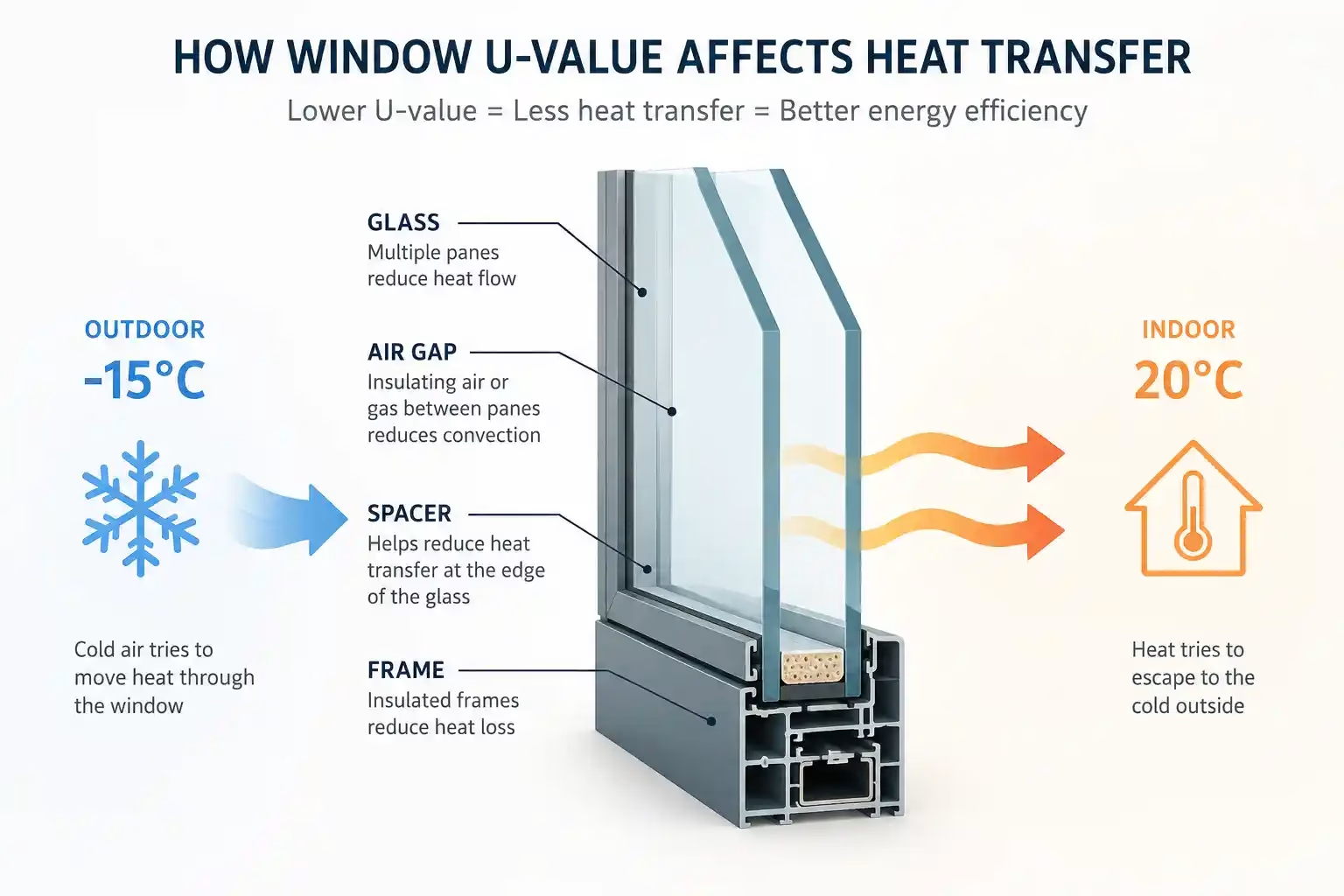
Window U value measures the rate of heat transfer through a window. In plain English, it tells you how quickly heat can pass from one side of the window to the other.
In winter, heat wants to escape from inside to outside. In summer, outdoor heat can move inward and make the interior harder to cool. A lower window U value means the window slows that movement more effectively.
This is why energy-focused glass upgrades often include better insulated glass units, improved spacers, Low-E coatings, gas fills, and stronger edge seals. The glass itself matters, but so does the full window system around it.
Many people ask, “Is a lower window U value always better?” In cold Canadian climates, a lower number is usually desirable because it reduces heat loss. However, the best choice still depends on the building, the direction the windows face, the amount of glass, ventilation, shading, and whether the goal is comfort, savings, tenant appeal, or code-conscious performance.
If you are already comparing thermal glass options, Zenith Glass’s insulated glass services are a natural place to connect performance goals with practical glass solutions.
Window U Value vs. R-Value, SHGC, and Energy Rating
Window performance can feel confusing because several ratings often appear together. Window U value is only one part of the story, but it is one of the most important parts.
Here is a simple breakdown:
| Rating | What It Means | Why It Matters |
|---|---|---|
| Window U value | How quickly heat transfers through the window | Lower is better for reducing heat loss |
| R-value | Resistance to heat flow | Higher is better, but windows are usually compared by U-value |
| SHGC | Solar Heat Gain Coefficient, or how much solar heat passes through | Important for south- and west-facing glass |
| Visible transmittance | How much visible light passes through | Affects brightness, daylight, and comfort |
| Energy Rating | A broader rating that combines several performance factors | Helpful for comparing certified window products |
Natural Resources Canada’s energy rating guidance is useful for understanding how U-factor, solar heat gain, and air leakage work together. For buyers comparing certified products, ENERGY STAR Canada window guidance is also a helpful reference.
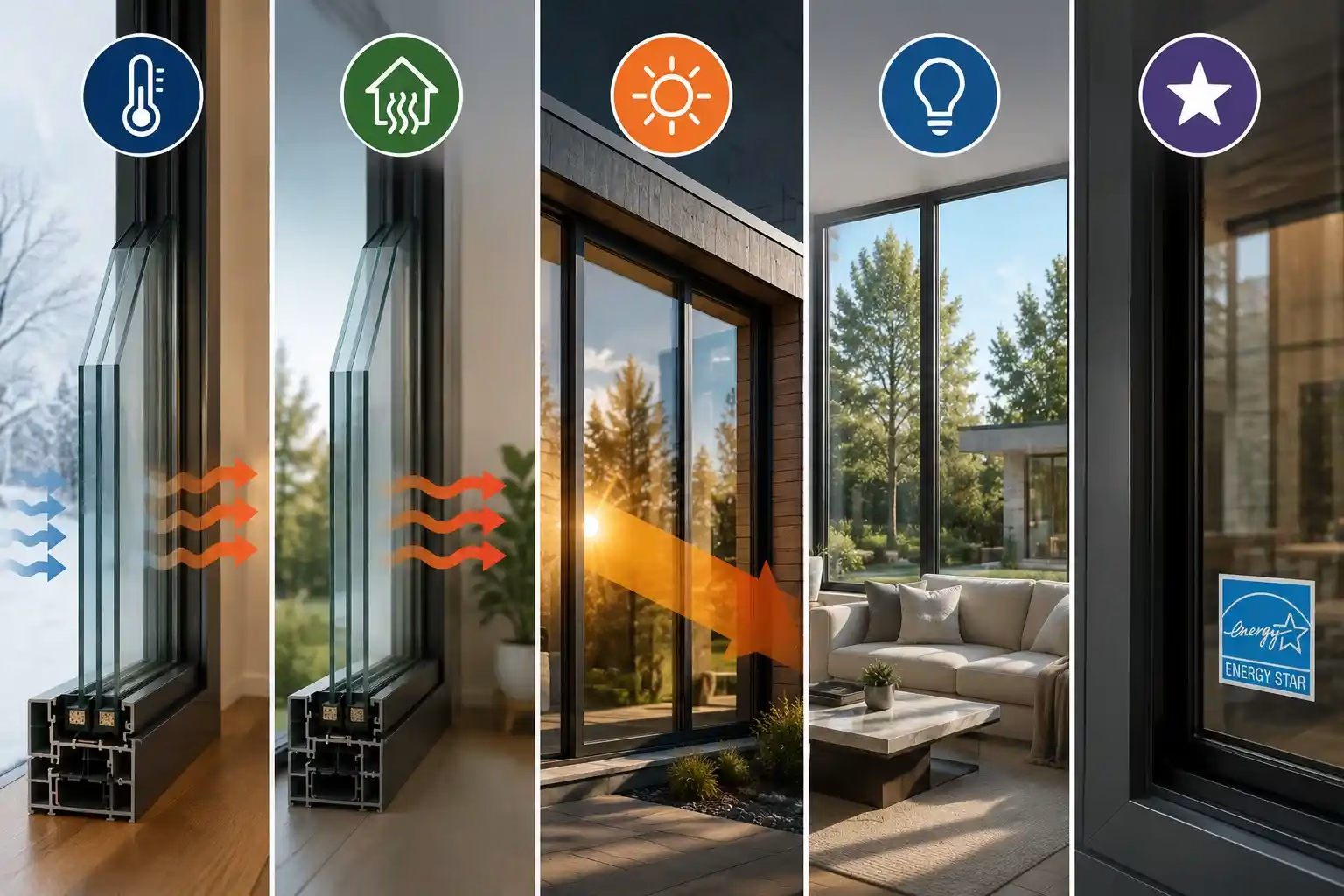
Still, numbers are only useful when they are interpreted correctly. A lower window U value may help reduce heat loss, but if the unit is poorly installed, the frame is weak, the seal fails, or the glass type does not fit the application, the real-world result may fall short.
Why Window U Value Matters in Canada
Canada’s climate makes window performance especially important. Buildings experience cold winters, warm summers, freeze-thaw cycles, condensation risks, strong sunlight, wind, rain, and seasonal temperature swings.
In that environment, window U value can influence how comfortable a room feels even when the thermostat says the temperature is fine.
A room with poor glass performance may feel cold near the window. People may avoid sitting beside it. Condensation may appear. Heating systems may work harder. In commercial spaces, customers and employees may notice drafts or uneven temperatures near large storefronts.
For homeowners, this affects daily comfort. For businesses, it affects customer experience and operating costs. For landlords and investors, it can affect tenant satisfaction, maintenance planning, and perceived property quality.
This is also why glass should be evaluated as part of a system. A window with a better window U value can support energy performance, but the frame, hardware, seals, glazing type, and installation quality must all work together.
If performance issues already include fogging between panes, Zenith’s guide on fogged double-pane glass windows can help explain why internal moisture is usually more than a cosmetic problem.
How Glass Choices Affect Window U Value
Window U value is affected by more than the number of panes. A basic double-pane unit and a high-performance insulated glass unit may look similar from across the room, but they can perform very differently.
Single-pane glass
Single-pane glass offers limited insulation. It may still be found in older homes, older storefronts, sheds, interior openings, or outdated commercial units. From an energy perspective, it usually performs poorly because heat moves through it easily.
For buyers or investors assessing an older property, single-pane glass can be a sign that future upgrades may be needed. It does not always mean every window must be replaced immediately, but it should be included in the building review.
Double-pane insulated glass units
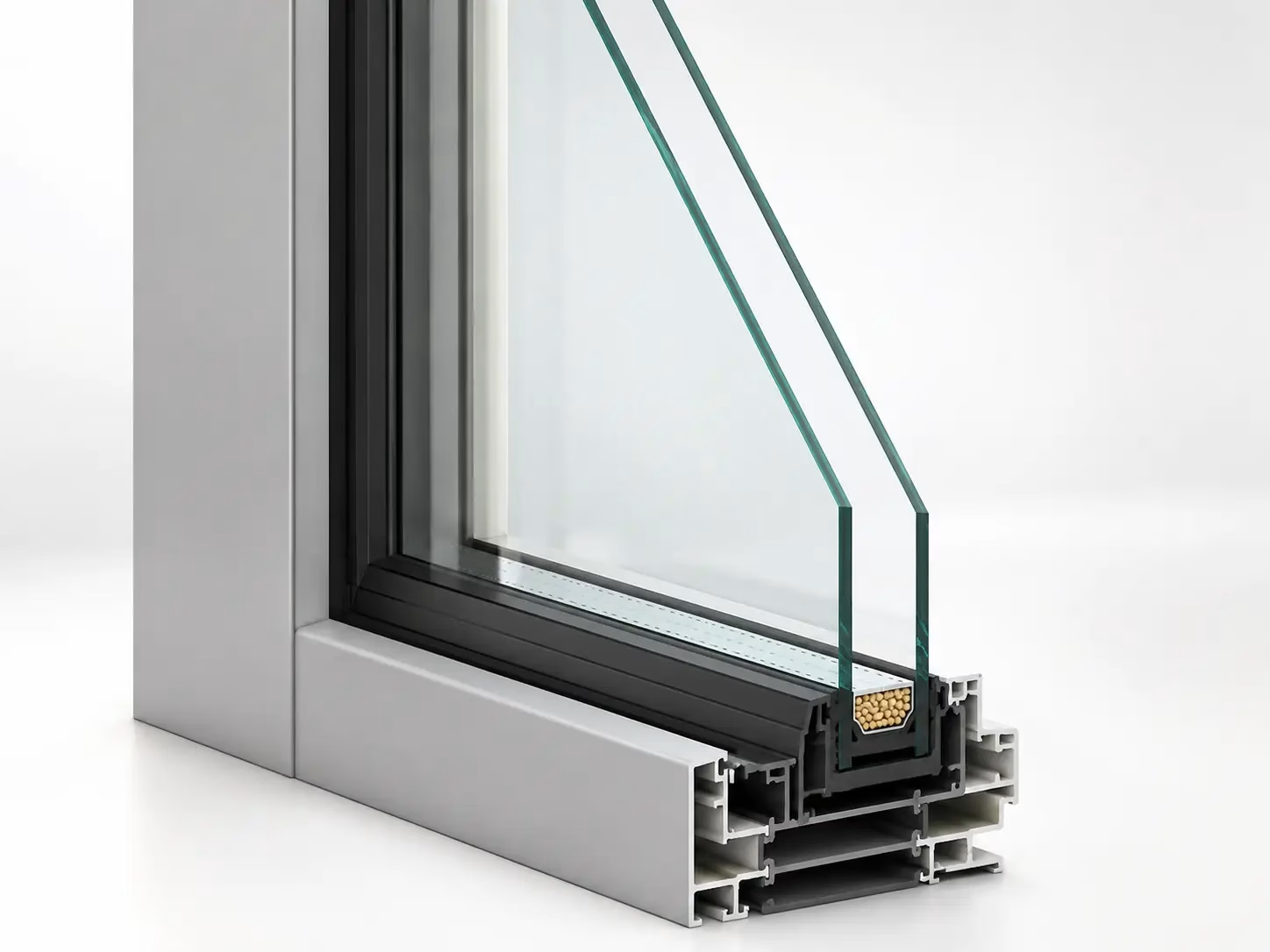
Double-pane insulated glass units improve performance by using two panes of glass with a sealed space between them. That space helps slow heat transfer.
This is where window U value begins to improve meaningfully. The sealed gap, spacer system, glass type, gas fill, and coating all influence how well the unit performs.
Zenith’s article on upgrading windows with insulated glass units is a helpful companion if you want to understand why IGUs are commonly used for comfort and energy efficiency.
Low-E glass
Low-E glass uses a thin coating designed to reflect certain types of heat energy while still allowing visible light through. It can help improve window U value and overall comfort, especially when combined with insulated glass.
The benefit is not just energy savings. Low-E glass can also help rooms feel more stable, reduce harsh temperature swings near windows, and support better year-round usability.
Gas fills and spacer systems
Some insulated units use argon or other gas fills between panes to reduce heat transfer. Warm-edge spacer systems can also improve the edge performance of the glass unit.
This matters because the centre of the glass is not the only area where heat moves. Edges, seals, and frames can become weak points if they are not properly specified.
Frame and installation quality
A strong glass unit can underperform if the frame leaks air, the opening is poorly sealed, or the installation creates pressure on the glass. That is why the lowest advertised window U value should not be the only decision point.
Glass selection, measurement, fabrication, handling, and installation all affect real-world performance. For custom projects, Zenith’s glass thickness guide is useful because strength, support, and performance must be considered together.
7 Smart Ways to Use Window U Value Before Buying Glass
1. Use it to compare performance, not just price
Price matters, but it should not be the only comparison. A cheaper glass option with a weaker window U value may cost less upfront but perform worse over time.
For a home, that can mean colder rooms and comfort complaints. For a commercial property, it can mean higher operating costs and more strain on HVAC systems. For an investor, it can mean reduced appeal when tenants compare the space to more efficient buildings.

2. Match the glass to the building type
A detached home, retail storefront, office, and industrial facility do not need the same glass strategy.
A homeowner may care most about comfort, condensation, and energy bills. A storefront owner may care about visibility, appearance, security, and customer comfort. An office manager may want daylight without glare or overheating. An industrial facility may prioritize durability, insulation, safety, and reduced maintenance interruptions.
Zenith Glass supports these different needs through dedicated pages for commercial storefront glass, office glass, custom office glass dividers, and industrial glass solutions.
3. Look at orientation and solar exposure
Two windows with the same window U value can feel different depending on where they are placed.
South- and west-facing glass may receive stronger sun exposure. In some rooms, that can be helpful during winter. In others, it can create overheating, glare, or cooling challenges in warmer months.
This is where SHGC becomes important. Window U value explains heat transfer through the window, while SHGC explains solar heat gain through sunlight. A good glass choice considers both.
4. Review comfort complaints before choosing a product
Before upgrading, ask what problem you are trying to solve.
Is the room drafty? Is the glass fogging? Is there condensation? Is one side of the building too hot in summer? Are tenants complaining about cold offices? Is a storefront uncomfortable near the entrance?
These clues help determine whether the issue is glass performance, seal failure, air leakage, frame condition, poor installation, or another building-envelope problem.
If cracks are appearing without a clear impact, Zenith’s guide to window stress cracks can help you understand why temperature differences, frame pressure, and edge flaws matter.
5. Think about long-term value for buyers and investors
For property investors, window U value is not just a technical specification. It can be part of a broader asset strategy.
Better glass performance may support lower operating costs, fewer comfort complaints, better leasing appeal, stronger resale presentation, and improved modernization planning.
This matters in multi-unit buildings, retail plazas, offices, mixed-use properties, restaurants, clinics, showrooms, and industrial spaces. A building with outdated, fogged, drafty, or inefficient glass can feel older than it really is.
On the other hand, high-quality glass upgrades can make a property feel cleaner, brighter, quieter, and better maintained. Zenith’s projects page can help buyers and investors visualize how different glass upgrades improve both function and appearance.
6. Avoid choosing glass by thickness alone
Thicker glass is not automatically the best choice for energy performance. Thickness can affect strength, feel, stability, sound control, and safety, but window U value depends on the complete glass assembly.
For example, a properly designed insulated glass unit with Low-E coating may outperform a thicker single-pane option for thermal comfort. A laminated safety glass assembly may be ideal for security or sound control, while a different insulated unit may be better for energy performance.
That is why comparing glass types matters. Zenith’s article on tempered vs. laminated glass is helpful when safety, breakage behaviour, security, and performance all need to be weighed together.
7. Plan upgrades before glass failure becomes urgent
The best time to evaluate window U value is before a pane cracks, fogs, leaks, or becomes uncomfortable enough to require urgent replacement.
Planned upgrades allow better product comparison, more accurate budgeting, and stronger design decisions. Emergency repairs are sometimes unavoidable, but they rarely give buyers as much time to compare performance options.
For businesses, this is especially important. A broken storefront or failing commercial door can affect security, operations, and customer confidence. Zenith’s commercial glass doors and windows page is a practical resource for business owners reviewing performance, safety, and appearance together.
Can Window U Value Improve Without Replacing Every Window?
Sometimes, yes. The right approach depends on what is actually failing.
If the existing frame is in good condition and only the insulated glass unit has failed, replacing the glass unit may be an option. If the frame is warped, leaking, damaged, or outdated, a broader replacement may be smarter.
If the issue is only comfort near one elevation, targeted upgrades may be more cost-effective than replacing every window. For example, a west-facing office wall, a cold storefront entrance, or a fogged section of a commercial building may deserve priority.
For homeowners, this can keep the project manageable. For investors, it can support phased capital planning instead of one large upgrade all at once.
Zenith’s glass maintenance checklist can help identify which glass systems are still performing and which ones may need attention first.
Common Mistakes When Comparing Window U Value
The first mistake is assuming that one number tells the whole story. Window U value is important, but it should be reviewed with SHGC, air leakage, visible light, safety glass needs, frame condition, and installation quality.
The second mistake is comparing products without checking whether the ratings apply to the full window or only part of the glass package. Buyers should understand what is being measured before making decisions.
The third mistake is ignoring the building’s use. A rental condo, restaurant storefront, warehouse, medical office, and private home all have different performance priorities.
The fourth mistake is waiting too long. Fogging, drafts, cracked edges, loose seals, and repeated repairs are signs that performance may already be declining.
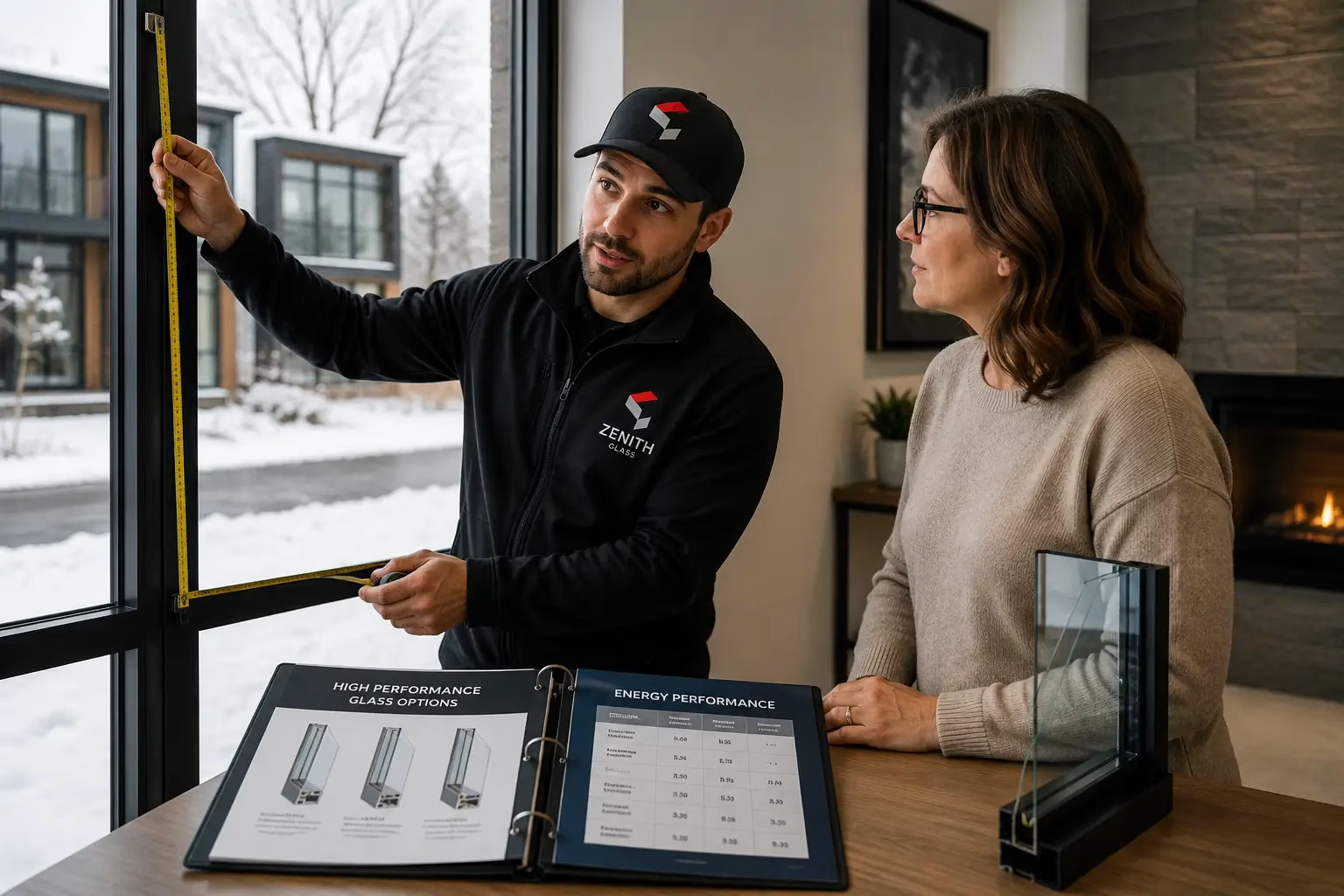
The fifth mistake is choosing a product without professional measurement. Even high-performance glass can fail early if the opening, frame, support, or seal details are wrong.
Window U Value for Homes, Storefronts, Offices, and Industrial Spaces
For residential buyers, window U value helps explain why some rooms feel warmer, quieter, and more comfortable than others. It is especially useful when upgrading older windows, replacing failed double-pane units, or improving comfort in bedrooms, living rooms, basements, and home offices.
For storefronts, glass performance affects more than utility bills. It influences the customer experience. Large panes can make a business feel bright and welcoming, but poor-performing glass can create hot zones, cold drafts, condensation, and a tired appearance.
For offices, better glass performance can support daylight, privacy, meeting room comfort, and employee satisfaction. If an office is already being redesigned, glass performance should be reviewed alongside layout, sound control, and visual privacy.
For industrial buildings, window U value matters because large openings, high ceilings, demanding operations, and older glazing can create major comfort and efficiency challenges. Zenith’s heavy-duty glass services are especially relevant when durability and performance must work together.
Why Property Investors Should Pay Attention to Window U Value
For Canadian property investors, glass performance can influence more than monthly utility costs.
A building with outdated glazing may feel less comfortable during showings, inspections, tenant walkthroughs, and everyday use. Cold interior glass, condensation, fogged panes, and visible seal failure can all create the impression that a property has been under-maintained.
A better window U value can support a more stable indoor environment. It can also help make a property feel newer, more efficient, and easier to operate.
This is especially relevant for income properties, retail units, offices, clinics, restaurants, and mixed-use buildings. When tenants compare spaces, the comfort and appearance of the glass can affect how they perceive the whole property.
Investors do not always need to replace every piece of glass at once. In many cases, a phased approach works well. High-priority areas may include front-facing storefront glass, fogged double-pane units, cold office elevations, damaged entry doors, or older glazing in high-use spaces.
A smart upgrade plan begins with inspection, not assumptions. The goal is to identify which glass systems are performing, which are failing, and which upgrades will create the strongest practical value.
Local Glass Decisions Still Matter
Even with national performance guidance, local conditions matter. Properties in the Greater Toronto Area may face different exposure patterns depending on traffic, building height, wind, shade, age, and use.
A North York industrial unit, a Markham storefront, and an Oakville residential property may all need different recommendations even if the general goal is better energy performance.
Zenith Glass serves a wide range of areas through its GTA service areas, including local pages for North York glass repair, Markham glass repair, and Oakville glass repair.
Local review is important because a good recommendation depends on the actual opening, not just a product label.
Plan a Smarter Glass Upgrade With Zenith Glass
Window U value gives buyers, investors, contractors, and property managers a clearer way to compare glass performance before making an upgrade. It helps explain why some windows lose heat faster, why insulated glass units matter, why Low-E coatings can improve comfort, and why professional selection is better than guessing.
Still, the number should never be reviewed in isolation. The right glass choice should consider energy performance, safety, appearance, code expectations, daily use, exposure, frame condition, maintenance history, and long-term property goals.
That is where Zenith Glass can help. Whether you are reviewing insulated glass for a home, planning a storefront upgrade, improving an office, or assessing an industrial property, Zenith Glass brings practical glass expertise to residential, commercial, and industrial projects.
You can start by exploring Zenith Glass’s main glass services, reviewing insulated glass options, browsing completed glass and mirror projects, or visiting the contact page to discuss the best glass solution for your property.
When you understand window U value, you are no longer choosing glass based only on appearance or price. You are choosing it based on comfort, performance, value, and how the building needs to work every day.