

Triple pane windows come up in almost every fall window conversation in Ontario. The first cold night arrives, a living room window feels icy to the touch, condensation shows up on the glass, and the obvious question follows: should the next upgrade be double or triple pane?
The honest answer depends on your frames, your rooms and your goals. This guide explains what triple pane windows actually do, how they compare with a good double-pane unit, and the checks that matter before you order anything. If you are already comparing glass options, Zenith’s insulated glass services page explains how sealed units are built and replaced.
What Triple Pane Windows Actually Are
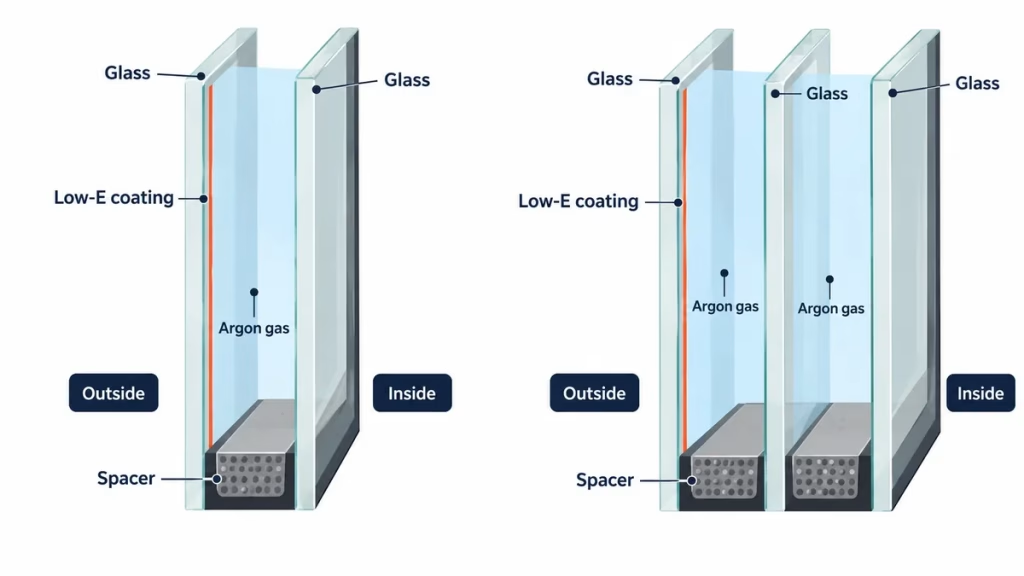
Triple pane windows use a sealed insulated glass unit with three layers of glass instead of two. The three lites create two sealed spaces, usually filled with argon or krypton gas, with spacers around the edges and a desiccant to keep the inside of the unit dry.
That second gas space is the main advantage. Each sealed layer slows heat flow through the glass, so the room-side pane stays warmer on a cold day. In practice, that means less radiant chill when you sit next to the window and less chance of condensation forming on the inside glass.
Most quality units also include a low-E coating, a microscopically thin metallic layer applied at the factory. According to Natural Resources Canada’s guidance on upgrading windows, low-E coatings can reduce heat loss in winter and heat gain in summer by up to 50%. You can learn more in our guide to the benefits of low-E glass.
What is the difference between triple glazed and triple pane?
There is no difference. “Triple glazed” and “triple pane” both describe a sealed unit with three layers of glass. Window suppliers in Canada use the terms interchangeably, so compare the actual specifications rather than the label.
Triple Pane Windows vs Double Pane: How They Compare
The most useful number for comparing glass is the U-factor, which measures how much heat passes through the whole window. Lower is better. Our window U-value guide explains the rating in detail, but the short version is that a lower U-factor means a warmer window in January.
Natural Resources Canada notes that better-performing double-glazed windows can reach U-factors of 1.2 W/m²·K or lower, while triple pane windows can reach U-factors as low as 0.8 W/m²·K. For reference, the current ENERGY STAR Canada technical specification requires a maximum U-factor of 1.22 W/m²·K, or a minimum Energy Rating of 34, for certified windows and doors.
| Factor | Good double-pane unit | Triple pane windows |
|---|---|---|
| Layers of glass | Two | Three |
| Sealed gas spaces | One | Two |
| Typical best U-factor | About 1.2 W/m²·K or lower | As low as 0.8 W/m²·K |
| Room-side glass temperature in winter | Warmer than single pane | Warmest of the three |
| Weight | Baseline | Noticeably heavier |
| Fits existing double-pane sash | Usually | Often not without frame changes |
| Upfront cost | Lower | Higher |
The gap between a basic double-pane unit and a high-performance one can be bigger than the gap between a high-performance double-pane unit and a triple. That is why the specification matters more than the number of panes.
Are triple pane windows worth it in Ontario?
Triple pane windows are usually worth it when you are replacing whole windows, plan to stay in the home for years, and have large glass areas, cold rooms or noisy streets. For smaller windows or a short ownership horizon, a well-specified double-pane unit with low-E and argon often delivers most of the comfort for less money.
Climate plays a role too. Homes in Toronto and the GTA see long heating seasons, while properties further north in Barrie or Muskoka face even colder stretches, which can shorten the payback on extra insulation.
7 Smart Checks Before You Upgrade to Triple Pane Windows
Before you request quotes, run through these seven checks. They prevent the most common surprise: ordering glass that the existing window simply cannot hold.
1. Check your frame and sash depth
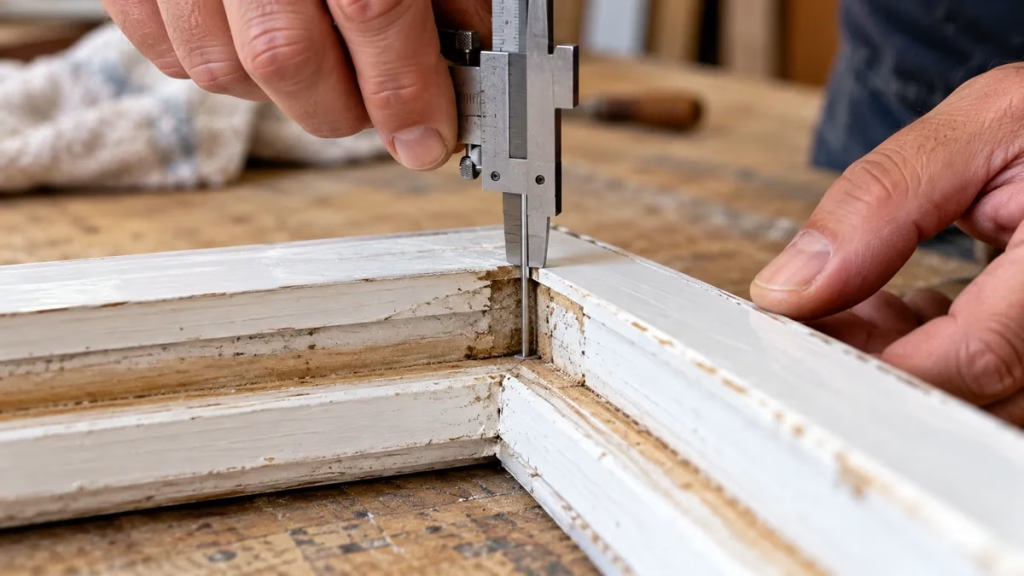
A triple-glazed sealed unit is thicker overall than a double-glazed one. Many existing sashes were designed around a specific double-pane thickness, so a triple unit may not fit the glazing pocket without changing the sash or the whole window. A glass professional can measure the pocket and tell you what will fit before anything is ordered.
2. Plan for the extra weight
Glass weighs roughly 2.5 kg per square metre for every millimetre of thickness. Adding one more 3 mm lite therefore adds about 7.5 kg per square metre of glass. On a large casement or a tall picture window, that extra mass affects hinges, rollers, operators and how the sash is supported.
3. Expect slightly less solar heat and daylight
Every extra layer of glass and coating reduces the light and solar heat that pass through. On a south-facing wall, that can mean less free winter warmth. Our guide to the solar heat gain coefficient explains how to balance comfort and sunlight by orientation.
4. Be realistic about noise
More glazing layers help reduce outdoor noise, but the number of panes is not the whole story. Laminated glass, different lite thicknesses and tight installation often matter more. If traffic noise is your main complaint, read about how soundproof glass works before deciding.
5. Look at condensation on the inside glass
Because the room-side pane stays warmer, triple pane windows can reduce interior condensation in cold weather. They cannot fix high indoor humidity on their own, though. Ventilation and humidity control still matter.
6. Ask about spacers and gas fill
Traditional aluminum-box spacers conduct heat and can cause cold, wet edges. Warm-edge spacers with a thermal break perform better, and Natural Resources Canada notes that a gap of 12 to 16 mm between panes minimizes convection losses. Ask which spacer, gas and coating each quote includes.
7. Check rebate rules before you buy
At the time of writing, Ontario’s Home Renovation Savings Program lists a rebate of $100 per rough opening for ENERGY STAR certified windows and doors. Windows fall under the bundled option, which starts with a home energy assessment and requires two or more upgrades. Confirm the current rules before work begins, because the order of steps matters.
When a Better Double-Pane Unit Is the Smarter Choice
Triple pane windows are not automatically the best answer. If your frames are solid and the only problem is a failed seal or outdated glass, replacing the sealed unit with a modern double-pane low-E unit can be the most practical fix.
This is common in older GTA homes and condos where the frames are still sound. A new unit with low-E, argon and a warm-edge spacer can feel very different from the original glass, without the cost and disruption of a full window replacement.
Can you put triple pane glass in an existing window frame?
Sometimes, but often not. It depends on the depth of the glazing pocket and whether the sash and hardware can carry the extra weight. If the pocket is too shallow, the realistic options are a high-performance double-pane unit or replacing the sash or window.
Do triple pane windows stop condensation?
They reduce it on the inside glass, but they do not eliminate it. If indoor humidity is high, moisture can still form at the bottom edges in very cold weather. Fog between the panes is a different problem: it means the seal has failed, and our guide to fixing fogged double-pane glass covers what to do.
How to Compare Quotes for Triple Pane Windows
Two quotes for triple pane windows can look similar on the first page and be very different in the details. Ask every supplier to list the same items so you can compare them line by line:
- The whole-window U-factor or Energy Rating, not only the centre-of-glass value
- Glass thickness for each lite and whether any lite is laminated or tempered
- Type of low-E coating and which surfaces it is on
- Gas fill (argon or krypton) and spacer type
- Whether the quote covers glass only, the sash, or the full window
- Removal, disposal, interior trim and exterior sealing
- Warranty terms for the sealed unit and for the installation
Centre-of-glass numbers look better than whole-window ratings because they ignore the edges and the frame. Natural Resources Canada warns that these values make a product appear more energy-efficient than it really is, so ask for the whole-window figure.
How much more do triple pane windows cost?
Triple pane windows typically cost more than comparable double-pane units because of the extra glass, the second gas space and the heavier hardware. The real difference on your project depends on window size, coatings, gas fill and whether the sash or frame has to change.
The biggest cost jump usually comes from frame changes, not the glass itself. When a triple unit fits the existing opening, the premium is mostly material. When it does not, the job becomes a full window replacement, with more labour, trim work and disposal.
Why Fall Is the Right Time to Decide
Insulated glass units are made to measure, so they are not off-the-shelf products. Measuring in October gives you time to compare quotes and confirm rebate steps before the coldest months.
It is also the best time to spot problem windows. Walk through the house on a cold morning and note which rooms feel drafty, which panes collect moisture and which units look foggy. That list makes any quote more accurate and helps you decide where triple pane windows make sense and where a better double-pane unit is enough.
Talk to Zenith Glass About Triple Pane Windows for Your Home
Zenith Glass & Mirror measures, supplies and installs insulated glass units for homes across Toronto and the GTA, from North York to Mississauga, Vaughan and Durham Region. We can check your glazing pockets, explain whether triple pane windows will fit, and compare that option with a high-performance double-pane replacement.
If your windows are drafty, foggy or simply cold to sit beside, explore our residential glass repair and replacement services, then request a free quote and tell us which rooms bother you most.