

Soundproof Glass: 7 Powerful Benefits for Quieter Buildings
Soundproof glass is becoming a practical design consideration for Canadian homes, offices, storefronts, and industrial spaces because noise is no longer just a background issue. In busy areas, glass often sits between the inside of a building and road traffic, construction, delivery zones, HVAC equipment, parking lots, conversations, and daily commercial activity.
Most people do not think about glass until it cracks, fogs, leaks, or looks dated. But glass also plays a major role in how quiet a room feels. A beautiful window, partition, storefront, or office wall can still underperform if it lets too much sound move through the opening.
That is where soundproof glass becomes useful. It helps property owners understand how the right glazing choices, frame details, seals, and installation methods can reduce unwanted noise while keeping the open, bright look that makes glass so appealing.
What Soundproof Glass Really Means
The phrase soundproof glass can be a little misleading. No glass can make a space completely silent by itself. Sound can travel through glass, frames, gaps, ceilings, walls, floors, doors, and even small cracks around an opening.
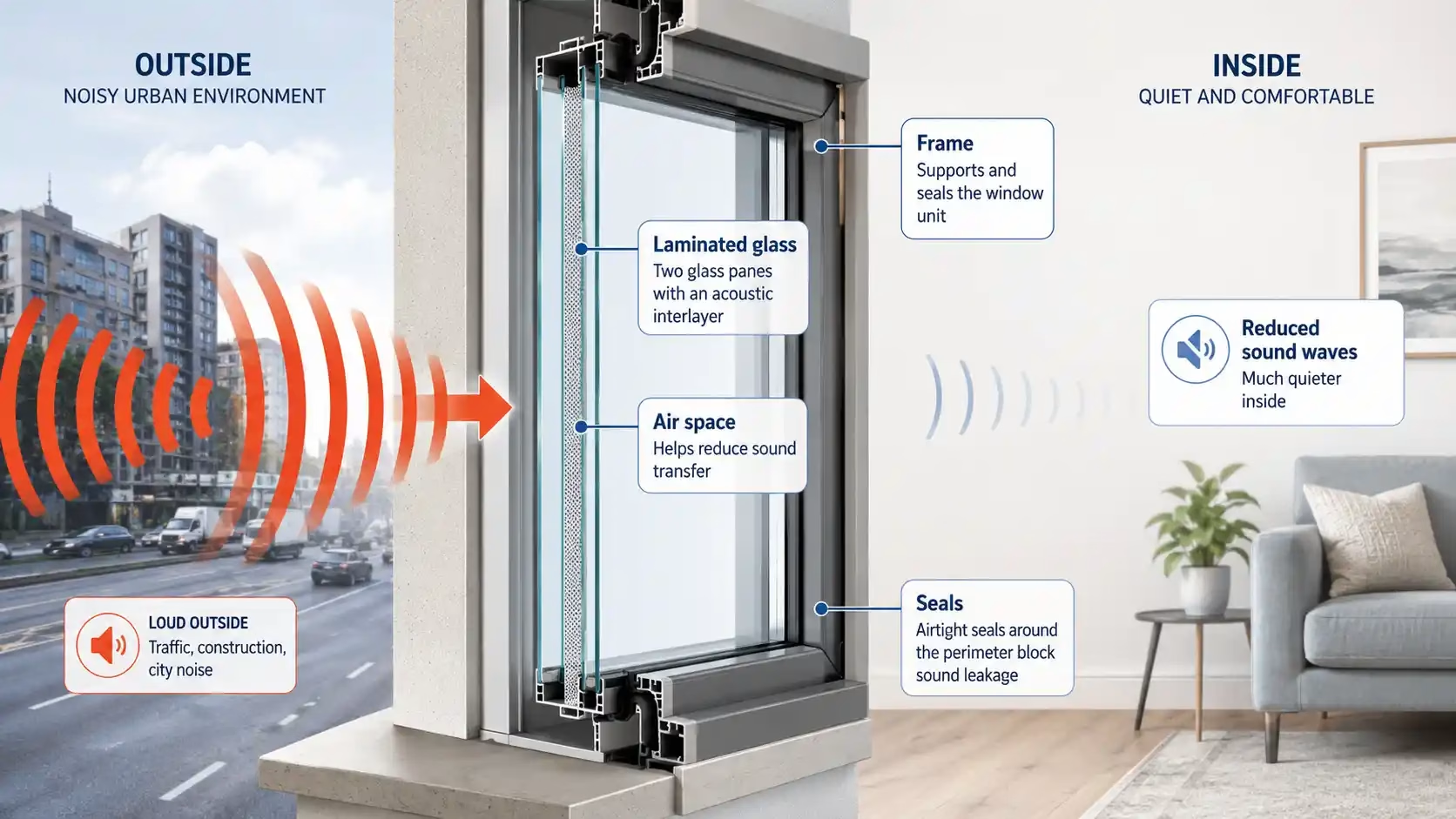
A better way to think about soundproof glass is “noise-reducing glass.” The goal is to lower sound transfer enough that a room feels calmer, more private, and easier to use. That may mean softening traffic noise in a home office, improving speech privacy in a meeting room, reducing outside distractions in a clinic, or making a storefront feel more comfortable for customers and staff.
For anyone comparing glass options, it helps to start with one simple question: what noise are you trying to control? Road noise, voices, machinery, music, and impact sounds behave differently. The right glass solution depends on the source, direction, frequency, and intensity of the sound.
How Noise Moves Through Glass
Sound is vibration. When noise reaches a pane of glass, some energy reflects away, some is absorbed, and some passes through. Thinner single-pane glass usually gives sound an easier path. A better-performing glass system uses a combination of mass, spacing, laminated layers, air gaps, and tight sealing to slow that vibration down.
This is why the glass alone is only one part of the answer. A premium pane installed in a weak frame or surrounded by worn seals may still let noise through. In many real buildings, the weakest point is not the centre of the glass. It is the edge, gap, hardware, frame, or installation detail.
If you are already dealing with drafts, rattling, foggy panes, or loose glass, it is worth reviewing the condition of the full opening. Zenith’s residential glass repair services are a helpful starting point for homes, while business owners can compare options through commercial storefront glass services.
7 Powerful Ways Soundproof Glass Can Improve a Building

1. It Can Make Street-Facing Rooms Feel More Comfortable
Homes, condos, offices, and storefronts near busy roads often have the same problem: the view is useful, but the noise is tiring. Traffic, sirens, motorcycles, garbage trucks, snow removal, and construction can make rooms feel less restful.
Soundproof glass helps reduce the amount of outdoor noise that enters through windows and glass doors. It is especially useful in bedrooms, nurseries, home offices, waiting rooms, consultation rooms, and work areas where concentration matters.
For homeowners, this can improve daily comfort without blocking natural light. For landlords and property managers, quieter interiors can make a space feel better maintained and more appealing. Local property owners can also use Zenith’s GTA service areas page to connect noise concerns with nearby glass repair and replacement support.
2. It Supports Better Privacy in Offices and Meeting Rooms
Modern offices use glass because it keeps spaces open, bright, and professional. The challenge is that open-looking rooms still need privacy. A boardroom, HR office, legal meeting room, finance department, or medical consultation room should not feel like every conversation carries into the hallway.
Soundproof glass can help reduce speech transfer when it is part of a complete office glass system. Laminated options, better seals, proper door alignment, and careful installation all matter. For workplaces planning glass partitions, Zenith’s glass office services and custom office glass dividers pages are especially relevant.
Does this mean a glass meeting room becomes perfectly silent? No. But it can become more practical. The goal is not to remove every sound. The goal is to reduce distraction and improve confidentiality enough that the room works for its purpose.
3. It Can Improve Customer Experience in Commercial Spaces
In retail stores, clinics, salons, restaurants, showrooms, and offices, noise affects how people feel inside the space. A clean storefront may attract attention, but a loud interior can make customers rush, staff feel drained, or consultations feel less private.
Soundproof glass can support a calmer commercial environment, especially when the building faces traffic, parking areas, loading zones, transit routes, or neighbouring businesses. It can also pair well with well-maintained commercial storefront glass when a business wants visibility without sacrificing comfort.
If the storefront already has cracks, damaged seals, loose doors, or fogged insulated units, noise may be only one symptom of a larger performance issue. Zenith’s article on storefront glass repair is a useful companion when appearance, security, and glass performance all need attention.
4. It Helps Industrial and High-Use Buildings Control Disruption
Industrial buildings, warehouses, workshops, manufacturing facilities, and logistics spaces often have stronger sound challenges than residential or office properties. Noise can come from equipment, loading docks, traffic, ventilation systems, production areas, or neighbouring industrial activity.
In these environments, soundproof glass should be considered alongside durability, safety, insulation, and maintenance. The glass may need to handle larger openings, higher exposure, stronger frames, and demanding daily use.
Zenith’s industrial glass solutions, industrial windows service, and insulated glass pages are relevant for facilities that want stronger glass performance across temperature control, visibility, safety, and noise reduction.
5. It Can Make Home Offices and Condo Living More Practical
Remote work and hybrid schedules have changed how people use their homes. A condo near a main road, a townhouse beside a school, or a house close to a busy intersection may feel fine in the evening but distracting during work hours.
Soundproof glass can help make a home office more usable without turning the room dark or closed off. It can also support better sleep in bedrooms, better focus in study areas, and a calmer feel in living rooms that face noisy streets.
If a home also needs design upgrades, noise control can be reviewed at the same time as glass shower planning, custom mirror updates, or custom glass features. Planning these details together helps the finished space feel intentional rather than patched together one issue at a time.
6. It Can Work With Safety, Privacy, and Energy Goals
Sound control rarely exists alone. Most property owners also care about safety, privacy, comfort, energy performance, appearance, and maintenance. The advantage of modern glazing is that one glass system can often support more than one goal.
For example, laminated glass may help with noise while also holding together if damaged. Frosted or patterned options can improve privacy while keeping light moving through the space. Insulated units can support thermal comfort while also helping with noise reduction when designed correctly.
To compare safety options, Zenith’s guide to tempered vs. laminated glass is worth reading before deciding what type of glass belongs in a specific location. For privacy-focused projects, frosted glass may also be part of the conversation.
7. It Can Support Long-Term Property Value
A quieter building often feels more comfortable, more private, and better planned. For homeowners, that can improve daily enjoyment. For commercial property owners, it can support tenant comfort, staff productivity, customer impressions, and long-term usability.
Soundproof glass is not always the first upgrade people notice visually, but they feel the difference once they spend time in the room. This makes it especially valuable for street-facing suites, clinics, offices, restaurants, showrooms, and premium residential renovations.
For inspiration on how glass can improve different spaces, Zenith’s projects page is a useful internal resource. It can help property owners think beyond the pane and consider the full design, function, and finish of a glass upgrade.
Soundproof Glass vs. Regular Glass
The difference between regular glass and soundproof glass is not only thickness. It is the full way the system manages vibration and air movement. Here is a simple comparison.
| Feature | Regular Glass | Soundproof Glass Approach |
|---|---|---|
| Noise control | Limited, especially with single panes | Designed to reduce sound transfer |
| Typical structure | Often one pane or basic glazing | May use laminated layers, varied thickness, or insulated units |
| Weak points | Glass, seals, frame, and gaps | Full opening is reviewed for performance |
| Best use | Low-noise areas or basic glass needs | Busy streets, offices, storefronts, clinics, and high-use spaces |
| Extra benefits | Light, visibility, basic separation | Noise reduction plus possible safety, privacy, and comfort benefits |

What Affects the Performance of Soundproof Glass?
Several details can change how well soundproof glass performs. The most important include glass thickness, laminated interlayers, pane spacing, air gaps, frame quality, seal condition, and installation precision.
STC ratings can help compare how well a building element reduces airborne sound, but they should not be treated as the only factor. Real-world results depend on the entire assembly. A high-performing pane in a leaky frame may disappoint. A well-selected glass unit with strong seals and a proper frame can feel much better in daily use.
For deeper context, resources from Health Canada on noise management, the National Research Council Canada on sound transmission into buildings, and the World Health Organization on environmental noise can help readers understand why building noise control matters beyond simple comfort.
Practical Limits to Know Before You Choose Soundproof Glass
Does Soundproof Glass Block All Noise?
No. Soundproof glass can reduce noise, but it does not erase every sound. Low-frequency noise, vibration, and flanking sound can still travel through walls, floors, ceilings, vents, and structural paths. This is why a realistic glass assessment should consider the full room, not only the pane.
Is Thicker Glass Always Better?
Not always. Thickness can help, but glass type, laminated layers, spacing, seals, and frame design may matter just as much. In some cases, two different glass thicknesses in one unit can perform better than two matching panes because they respond differently to vibration.
Can Existing Windows Be Upgraded?
Sometimes. If the frame is solid and the opening can support the right unit, glass replacement may be possible. If the frame is worn, leaking, shifting, or poorly sealed, the larger window or door system may need attention. Zenith’s window repair and replacement page is a practical place to start when existing glass is no longer performing well.
Is Soundproof Glass Only for Exterior Windows?
No. It can also be useful for interior office partitions, meeting rooms, glass doors, consultation spaces, display areas, and industrial rooms where noise control supports comfort or privacy. For interiors, design details such as door gaps, seals, ceiling height, and wall connections become especially important.
Signs Your Current Glass May Be Letting In Too Much Noise
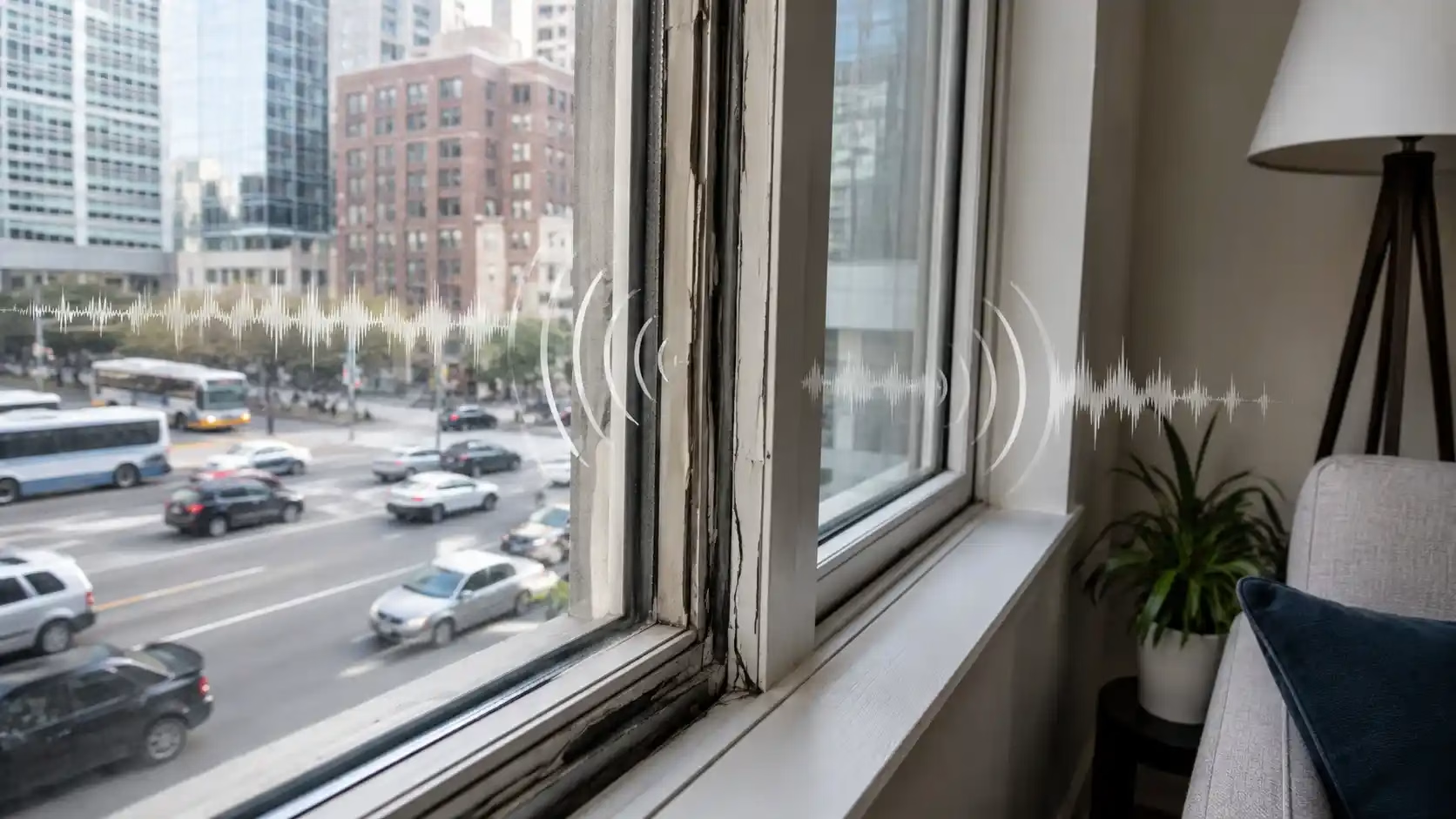
You may benefit from a closer glass review if conversations outside sound unusually clear, windows rattle during traffic, rooms facing the street feel harder to use, meeting rooms lack privacy, or employees complain about distractions near glass walls.
Other warning signs include drafts, fogging between panes, worn weatherstripping, loose frames, damaged caulking, doors that do not close tightly, or cracks near glass edges. These issues can affect sound, comfort, energy performance, and safety at the same time.
If cracks are also present, Zenith’s article on window stress cracks can help explain why some cracks appear without obvious impact. If the issue is trapped moisture, the guide on fogged double-pane glass windows is a relevant next read.
Where Soundproof Glass Makes the Most Sense
Soundproof glass is most useful where unwanted noise affects the way people live, work, shop, rest, or communicate. That includes street-facing bedrooms, condo windows, home offices, boardrooms, medical offices, storefronts, restaurants, schools, industrial offices, and buildings near parking lots or delivery zones.
It may be less urgent in quiet rooms, temporary spaces, or areas where noise is entering mainly through walls, vents, ceilings, or open gaps instead of glass. In those cases, glass may still help, but it should be part of a wider sound-control plan.
Location also matters. Property owners in dense GTA communities such as North York, Mississauga, Markham, Vaughan, and Oakville may experience very different noise conditions depending on road exposure, building height, nearby businesses, and seasonal construction.
Planning a Quieter Glass Upgrade With Zenith Glass

Soundproof glass is not about making a building silent. It is about making the right rooms calmer, more private, and more comfortable for the people who use them every day.
The best solution starts with the real problem. Is the noise coming from traffic, voices, machinery, a storefront entrance, a meeting room, or a loose window system? Is the glass single-pane, fogged, cracked, poorly sealed, or simply not designed for the current use of the space? Once those answers are clear, it becomes easier to choose the right glass type, thickness, laminated option, insulated unit, frame detail, or replacement plan.
Zenith Glass & Mirror works across residential, commercial, and industrial glass needs throughout the GTA. Whether you are comparing quieter windows for a home, better glass partitions for an office, upgraded storefront glass for a business, or stronger insulated glass for a facility, the team can help connect the right material with the right application.
To take the next step, explore Zenith’s main glass repair and replacement services, browse the glass expertise blog, or contact Zenith Glass & Mirror to discuss a glass solution that improves comfort, clarity, and everyday performance.